

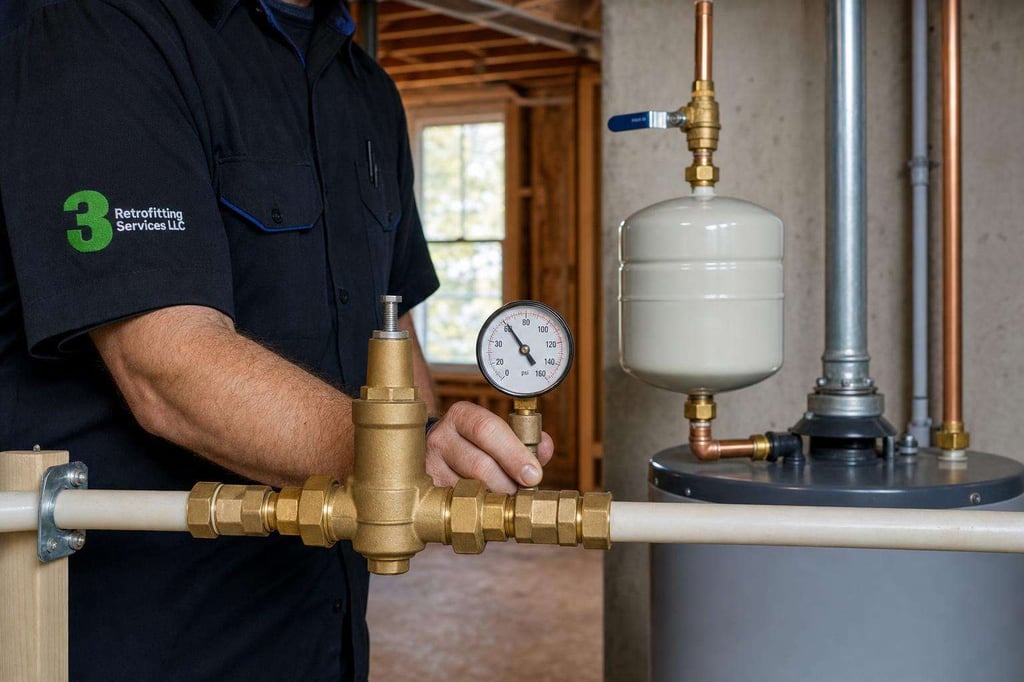
Pressure Regulators and Expansion Tanks Are Not the Same Thing
For many Portland homeowners, plumbing pressure problems can be confusing because different parts of the system work together behind the scenes. Two components that are often mentioned together are pressure regulators and expansion tanks. While both can help protect your home plumbing system, they solve different risks.
A pressure regulator helps control incoming water pressure. An expansion tank helps manage pressure changes caused by heated water expanding inside a closed plumbing system. Understanding the difference can help you know when to call a Portland plumber for evaluation, repair, or plumbing system upgrades.
What a Pressure Regulator Does
A pressure regulator, also called a pressure reducing valve, is designed to reduce high incoming water pressure from the main supply before it moves through your home. If water pressure is too high, it can place unnecessary stress on pipes, fixtures, valves, supply lines, and appliances.
Common Signs of High Water Pressure
- Banging or knocking sounds in the pipes
- Toilets that run frequently or fill aggressively
- Faucets that splash or feel unusually forceful
- Premature wear on appliance connections or fixture parts
- Recurring leaks at supply lines or shutoff valves
High pressure is not always obvious during everyday use, which is why a professional pressure reading can be helpful. If you are scheduling residential plumbing Portland service, asking about water pressure is a smart step, especially in older homes or homes with repeated leak issues.
What an Expansion Tank Does
An expansion tank is most often connected near a water heater. Its job is to absorb the extra volume created when water heats up and expands. In a closed plumbing system, that expanded water has nowhere to go, so pressure can build inside the system.
The expansion tank gives that extra volume a safe place to move, helping reduce stress on the water heater, piping, valves, and related components.
Why Expansion Matters for Water Heaters
When water is heated, it expands. If your plumbing system has a check valve, pressure reducing valve, or backflow prevention device, the expanded water may not be able to move back toward the main supply. This is known as thermal expansion.
For homeowners scheduling water heater service Portland, expansion tank condition and sizing may be part of the conversation, depending on the home’s plumbing setup and local requirements.
The Key Difference: Incoming Pressure vs. Thermal Expansion
The simplest way to separate these two devices is this:
- Pressure regulator: Controls pressure coming into the home from the water supply.
- Expansion tank: Absorbs pressure changes caused by water heating and expanding.
They are not interchangeable. A pressure regulator does not replace the function of an expansion tank, and an expansion tank does not correct consistently high incoming water pressure. In some homes, both may be appropriate because they address different parts of the plumbing system.
Why This Matters for Portland Homeowners
Portland homes can vary widely in age, plumbing layout, water heater setup, and previous repairs. A newer water heater may be connected to older piping. A home may have a pressure reducing valve installed but no expansion tank. Another home may have an expansion tank but still experience pressure that is too high at the fixtures.
That is why professional diagnosis matters. A qualified Portland plumber can measure water pressure, inspect the water heater area, review visible piping, and determine whether the issue is related to incoming pressure, thermal expansion, worn fixtures, or another plumbing concern.
When to Request Plumbing Repair in Portland OR
You may want to schedule plumbing repair Portland OR service if you notice symptoms that suggest pressure problems or repeated wear in the system. These issues can start small but may lead to leaks, water heater strain, or fixture damage if ignored.
Situations Worth Checking
- You hear banging pipes when fixtures shut off
- Your water heater relief valve drips or releases water
- You have recurring leaks at connections or valves
- Water pressure feels too strong or inconsistent
- You recently replaced a water heater and were advised to consider an expansion tank
- You are planning plumbing system upgrades in an older home
These signs do not always point to one specific cause, but they are good reasons to have the system inspected by a professional offering home plumbing services.
How Pressure Issues Can Affect Other Plumbing Services
Pressure problems can show up in different ways throughout the home. For example, repeated small leaks may lead to a need for leak repair Portland service. Fixture wear may become more common. Water heater components may experience additional stress. Even drain cleaning Portland appointments can reveal other concerns if water flow, fixture performance, or plumbing connections do not look right.
While drain issues and pressure issues are not the same, a full-service residential plumber can help identify whether multiple symptoms are connected or separate.
Professional Evaluation Helps Avoid Guesswork
Because pressure regulators and expansion tanks solve different problems, guessing can lead to the wrong repair. A professional inspection can help determine:
- Your home’s current water pressure
- Whether the pressure regulator is present and functioning properly
- Whether your plumbing system is closed or open
- Whether an expansion tank is present, properly sized, and in good condition
- Whether other components are contributing to leaks, noise, or pressure changes
Service availability and recommendations may vary based on the condition of your plumbing system.
Request Service from 3 Point Plumbing
If you are unsure whether your home needs a pressure regulator, an expansion tank, water heater service, leak repair, or another plumbing repair, 3 Point Plumbing llc can help. Our team provides professional home plumbing services for homeowners in Portland, OR, and the Portland metro area. For practical next steps, Request service and talk with the team about timing, scope, and the right path for your situation.