

What to Do First When You Notice a Plumbing Leak
Finding water where it should not be can be stressful, especially when you are not sure where the leak is coming from. The good news is that a few calm, practical steps can help you limit water damage and make the repair process smoother before a Portland plumber arrives.
These leak isolation steps are intended for Portland homeowners who want to protect their home while waiting for professional help. If you are unsure about the source of the leak, see active electrical hazards, or cannot safely access a valve, stop and wait for a licensed plumbing professional.
Step 1: Identify the General Leak Area
Start by locating the area where water is appearing. You do not need to diagnose the exact cause, but narrowing down the location helps determine which shutoff valve to use.
Common places leaks appear
- Under kitchen or bathroom sinks
- Around toilets, tubs, or showers
- Near a washing machine or dishwasher
- Around a water heater
- On ceilings, walls, or floors below plumbing lines
- Outside near hose bibs or irrigation connections
If water is coming through a ceiling or wall, the leak may be above or behind the visible wet area. Avoid cutting into surfaces or opening walls on your own. A professional offering plumbing repair Portland OR homeowners rely on can trace the source more safely.
Step 2: Shut Off the Fixture Valve if Possible
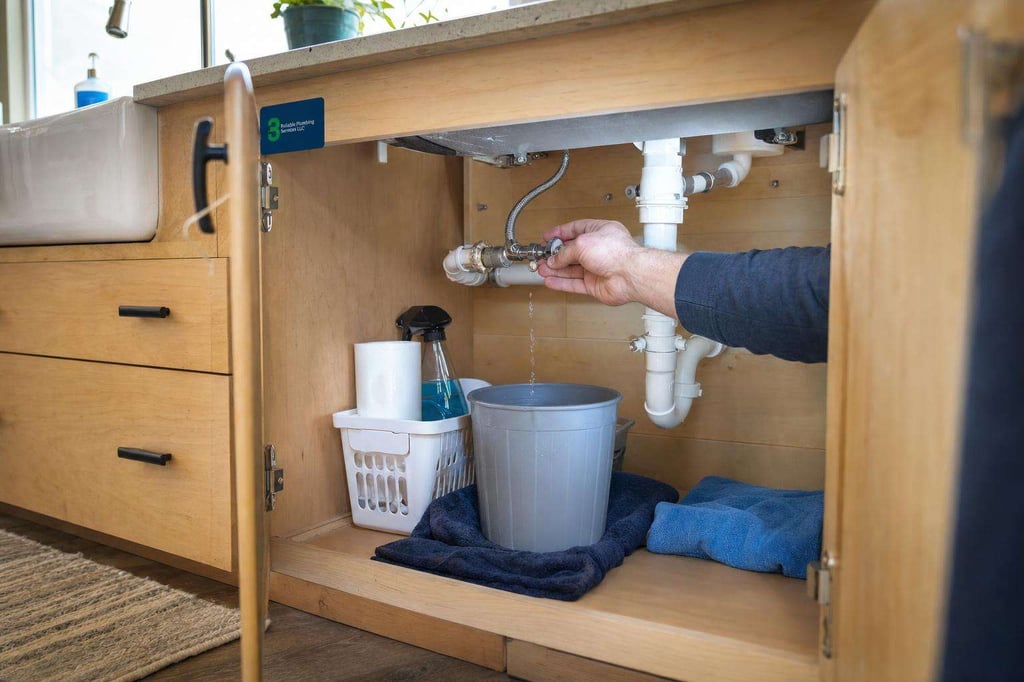
Many leaks can be isolated by turning off the local shutoff valve for the affected fixture. This may allow water to remain available in the rest of the home while stopping water flow to the leaking area.
Where to look for fixture shutoff valves
- Sinks: Look for small valves under the cabinet, usually one for hot water and one for cold water.
- Toilets: Look behind or beside the toilet near the wall or floor.
- Washing machines: Look behind the appliance for hot and cold supply valves.
- Dishwashers: The shutoff is often under the kitchen sink.
- Water heaters: The cold-water supply valve is typically located above the unit.
Turn the valve clockwise until it stops. Do not force a stuck valve, as older valves can break or worsen the leak. If the leak involves your water heater, it is best to request professional water heater service Portland homeowners can trust rather than trying to disassemble components.
Step 3: Use the Main Water Shutoff for Larger Leaks
If you cannot find a fixture valve, the leak is coming from a main line, or water is spreading quickly, shut off the main water supply to the home. This is one of the most important leak isolation steps you can take.
Common main shutoff locations
- Basement or crawl space near the front foundation wall
- Garage or utility room
- Near the water heater
- Exterior wall where the water line enters the home
- Meter box near the street or sidewalk
Once the main valve is off, open a low-level faucet, such as a basement or first-floor sink, to relieve pressure in the lines. This can help reduce dripping while you wait for leak repair Portland service.
Step 4: Turn Off Electricity in Wet Areas When Needed
Water and electricity are a serious safety concern. If water is near outlets, appliances, electrical panels, or light fixtures, keep your distance and avoid touching wet surfaces. If you can safely access your electrical panel without stepping through water, shut off power to the affected area.
If the panel itself is wet or you cannot access it safely, do not approach it. Wait for qualified help. Your safety comes before protecting belongings or investigating the leak.
Step 5: Contain the Water You Can Safely Reach
After the water is isolated, focus on limiting damage in areas you can safely access. Even small leaks can affect cabinets, flooring, drywall, and stored items.
Helpful containment steps
- Place towels, buckets, or pans under active drips.
- Move rugs, boxes, electronics, and valuables away from the wet area.
- Use a mop or wet/dry vacuum if it is safe and appropriate.
- Open nearby cabinet doors to improve airflow.
- Avoid placing fans near electrical hazards or standing water.
For leaks from drains, avoid running sinks, tubs, showers, dishwashers, or washing machines until the issue is inspected. If backups or slow drains are involved, professional drain cleaning Portland service may be needed in addition to pipe repair.
Step 6: Document What You See
Before cleanup changes the scene, take a few photos or short videos of the leak area, visible water, and any damaged materials. This can help your plumber understand what happened and may be useful if you need to speak with your insurance provider.
Details to note
- When you first noticed the leak
- Whether the water was hot or cold
- Which fixtures were being used at the time
- Whether you shut off a fixture valve or the main valve
- Any unusual sounds, odors, stains, or changes in water pressure
Clear information helps your technician troubleshoot efficiently and recommend the right home plumbing services for your situation.
Step 7: Avoid Temporary Fixes That Can Make Repairs Harder
It can be tempting to patch a leak quickly, but some temporary fixes can hide the real problem or create additional damage. Unless instructed by a plumber, avoid applying sealants, adhesives, or heavy tape to active plumbing leaks. These materials may not hold under pressure and can make proper repairs more difficult.
It is also best to avoid repeatedly turning the water back on to “test” the leak. Once the area is isolated, leave it off until a professional can inspect the system.
When a Leak May Point to a Bigger Plumbing Issue
Some leaks are caused by a single worn part, while others may be a sign of aging pipes, pressure problems, corrosion, failing valves, or improper installation. If your home has recurring leaks, water stains, slow drains, or inconsistent hot water, it may be time to discuss plumbing system upgrades with a professional.
For residential plumbing Portland homeowners depend on, a thorough inspection can help identify whether the issue is isolated or part of a larger system concern. Service availability and recommendations may vary based on the condition of your plumbing system.
Call 3 Point Plumbing for Leak Repair in Portland
Taking the right steps before a plumber arrives can help protect your home and reduce stress. If you need plumbing repair Portland OR homeowners can rely on, 3 Point Plumbing llc provides professional residential plumbing repair, leak repair, drain cleaning, water heater service, and plumbing system upgrades throughout Portland and the Portland metro area.
When you are ready to schedule service with 3 Point Plumbing llc, use the link below: For practical next steps, Request service and talk with the team about timing, scope, and the right path for your situation.