
Planning Plumbing Upgrades Without Disrupting Daily Operations
Plumbing system upgrades can improve reliability, reduce recurring repair issues, and support the long-term performance of a property. But when tenants, customers, employees, or residents are using the building every day, the work needs to be planned carefully.
For Portland property owners, managers, and homeowners coordinating larger plumbing projects, the goal is simple: complete necessary upgrades while keeping water access, restrooms, kitchens, and business operations as functional as possible. A thoughtful phasing plan can help reduce surprises and make the process easier for everyone involved.
Start With a Clear Plumbing Assessment
Before scheduling work, it helps to understand the condition of the plumbing system and which areas need attention first. A Portland plumber can evaluate visible piping, fixtures, shutoff access, water heater condition, drainage performance, leak concerns, and any recurring service issues.
This initial review can help determine whether the project should be handled as one larger upgrade or separated into smaller phases. In many cases, phasing work by floor, unit, restroom group, tenant space, or system type makes the project more manageable.
Common items to evaluate before phasing begins
- Known leaks or corrosion concerns
- Drainage issues or slow fixtures
- Water heater age, capacity, and performance
- Shutoff valve locations and accessibility
- Tenant schedules and peak business hours
- Restroom, kitchen, laundry, or utility room access needs
- Whether temporary water shutoffs will be required
Build the Schedule Around the People Using the Building
Tenant-occupied plumbing work is not just a technical project. It is also a coordination project. Business hours, customer traffic, quiet hours, lease requirements, and tenant needs should all be considered before the schedule is finalized.
For office, retail, restaurant, multi-unit, or mixed-use properties, upgrades may be easier to complete during off-hours, early mornings, weekends, or scheduled low-traffic periods. For residential buildings, work may need to be coordinated around residents who work from home, families with children, or shared amenities.
Scheduling questions to ask early
- When is water use highest in the building?
- Which tenants or units will be affected by each phase?
- Can work be completed after normal business hours?
- How much notice do tenants need before a shutoff?
- Are there noise restrictions or access limitations?
- Will any area need temporary signage or alternate restroom access?
Phase by Priority, Not Just Convenience
It may be tempting to start with the easiest areas first, but plumbing work should also be prioritized by risk and impact. Areas with active leaks, repeated drain backups, failing valves, or aging water heater components may need to move ahead of cosmetic or convenience-based upgrades.
For example, leak repair Portland property owners have postponed can become more disruptive if it affects walls, flooring, or nearby tenant spaces. Similarly, drain cleaning Portland services may reveal recurring buildup or damaged piping that should be addressed before other improvements are scheduled.
Priority-based phasing may include
- Phase 1: Address active leaks, shutoff issues, or safety concerns
- Phase 2: Upgrade high-use fixtures, drains, or water supply lines
- Phase 3: Schedule water heater service Portland properties may need for performance or reliability
- Phase 4: Complete lower-impact fixture replacements or system improvements
- Phase 5: Inspect completed work and document future maintenance needs
Communicate Early and Often With Tenants
Clear communication helps prevent frustration. Even a short water shutoff can feel disruptive if tenants do not know when it is happening or how long it may last. Share the schedule in advance, explain which areas are affected, and provide updates if timing changes.
Simple notices can include the date, expected work window, affected fixtures, water shutoff details, and who to contact with questions. For larger plumbing system upgrades, consider sending reminders the day before and the morning of the scheduled work.
Helpful details to include in tenant notices
- Project area or unit numbers affected
- Expected start and end time
- Whether water will be temporarily unavailable
- Any preparation needed from tenants
- Access instructions for maintenance or plumbing technicians
- Contact information for property management
Reduce Downtime With Smart Work Zones
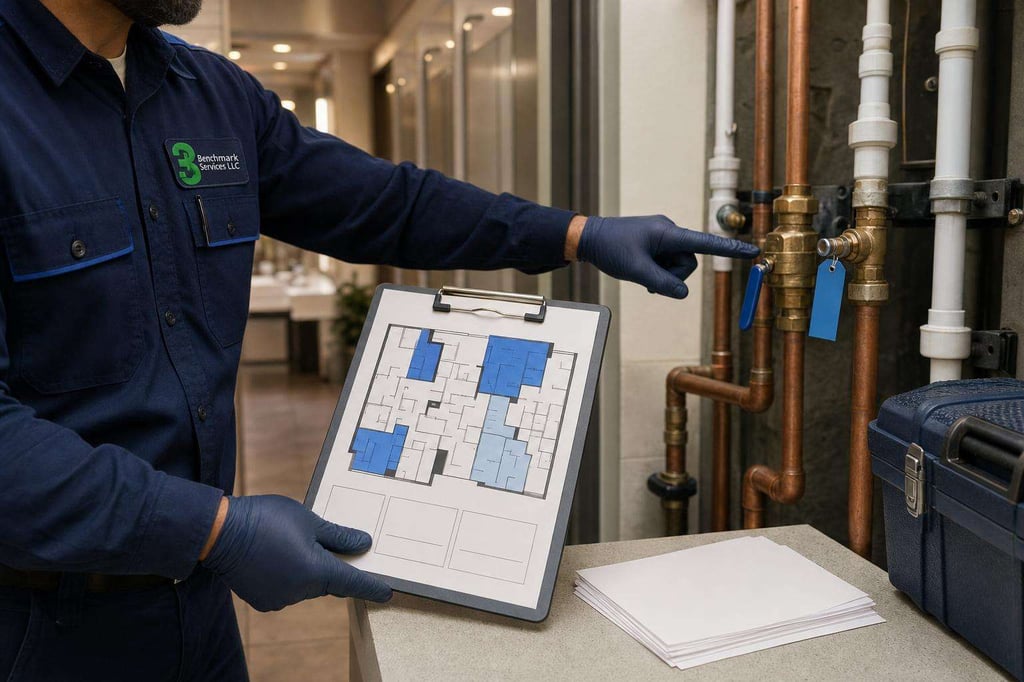
Dividing the building into work zones can help limit disruption. Instead of shutting down an entire property, a plumber may be able to isolate specific sections, floors, restrooms, or fixture groups depending on how the plumbing system is designed.
This approach is especially helpful in tenant-occupied settings where some businesses or residents need continuous access to water. It can also make it easier to confirm each section is complete before moving to the next area.
Examples of phased work zones
- One restroom bank at a time
- One floor or tenant suite at a time
- One group of units in a multi-unit property
- Separate scheduling for kitchens, laundry rooms, and utility areas
- Fixture-by-fixture upgrades where full shutdowns are not required
Plan for Water Heater and Drain Impacts
Water heaters and drain systems often affect multiple users at once, so they deserve special attention in the schedule. If a building relies on a shared water heater, service or replacement may need to happen during a carefully selected window. Water heater service Portland property owners schedule proactively can help reduce unexpected inconvenience later.
Drain work should also be coordinated with tenant use. Restaurants, shared kitchens, laundry areas, and restrooms may need extra planning so that tenants understand when fixtures should not be used.
Keep Documentation for Future Maintenance
After each phase, keep records of what was completed, which areas were affected, and any recommendations for future service. This documentation can help property managers plan future budgets, communicate with tenants, and respond more quickly if a plumbing issue comes up later.
Good records are also useful for residential plumbing Portland homeowners and multi-unit property owners who want a clearer picture of their home plumbing services, plumbing repair Portland OR history, and upcoming plumbing system upgrades.
Work With a Plumbing Team That Values Coordination
The right plumbing partner should understand that occupied buildings require more than technical skill. They require planning, communication, and respect for the people using the space. Whether the project involves leak repair Portland properties need, drain improvements, fixture replacement, or water heater work, coordination can make the upgrade process smoother.
Service availability and recommendations may vary based on the condition of your plumbing system.
Request Service From 3 Point Plumbing
If you are planning plumbing system upgrades and want help coordinating the next step, 3 Point Plumbing llc is here to help property owners and homeowners in the Portland metro area review their options and schedule service thoughtfully. For practical next steps, Request service and talk with the team about timing, scope, and the right path for your situation.